A Day Trip to Mutianyu Great Wall
Badaling or Mutianyu? I agonized over this choice for two whole days before departure. In the end, I picked Mutianyu — a Beijing local friend told me it's less crowded, the wall is well-preserved, and crucially, the vegetation coverage is exceptionally high. In autumn, it's basically an oil painting.
We set off from the city center at seven in the morning. An hour and a half's drive later, the view outside the window had transformed from high-rises into rolling mountain ranges. At the scenic area, we took a shuttle bus up the mountain, then switched to a cable car. As the cable car rose slowly, the watchtowers of the Great Wall began peeking out from layers upon layers of green trees. It felt like unwrapping a carefully wrapped gift.
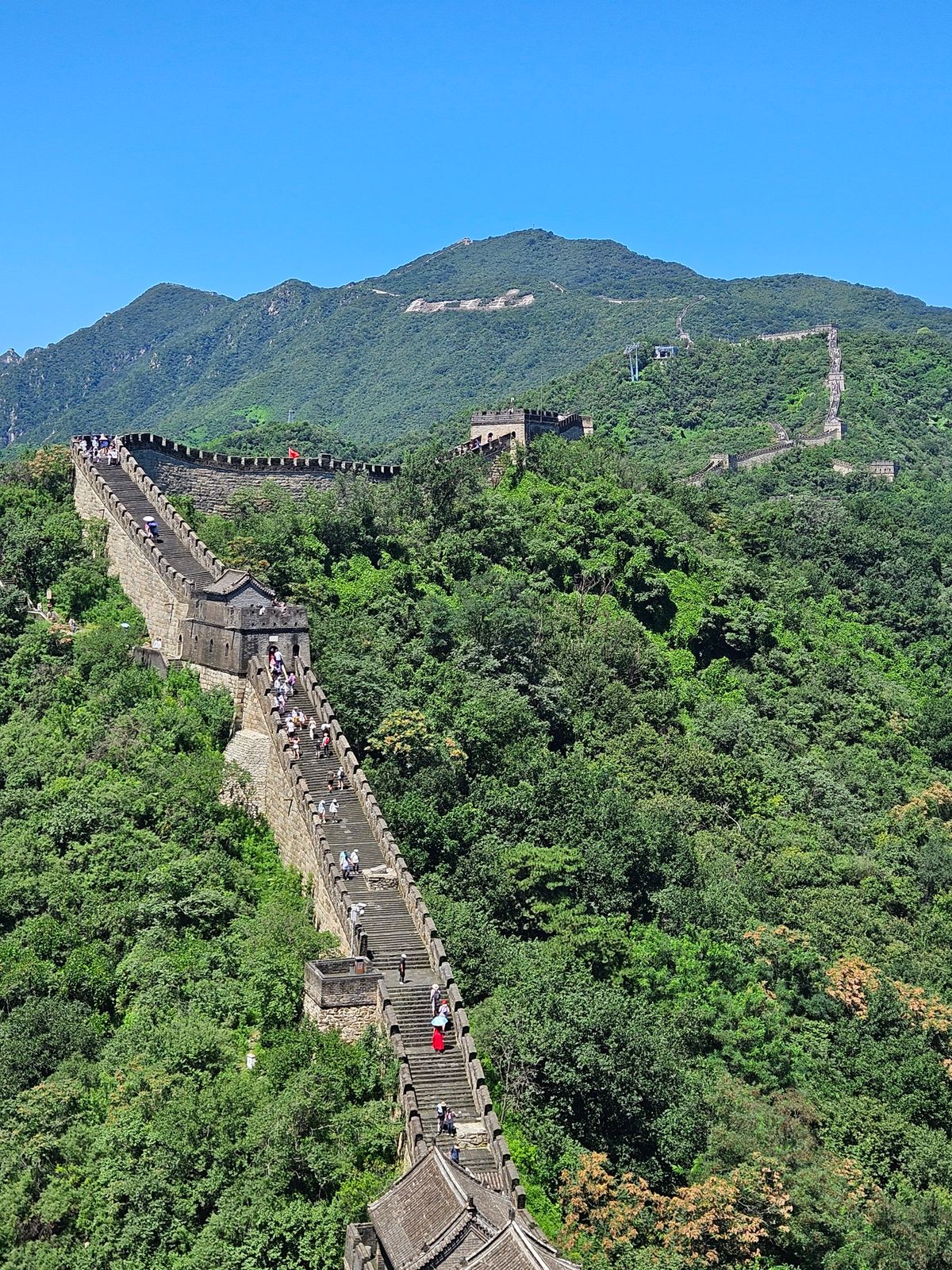
The moment my foot actually touched the ramparts, I stood frozen before the battlements for several seconds. The stone slabs underfoot had been worn smooth and glossy by the passage of time — every one of them heavy with history. Gazing into the distance, the wall snaked along the ridges, rising and falling like a giant dragon slumbering among the mountains. This section at Mutianyu has over twenty watchtowers, most of which retain their original Ming Dynasty appearance, unlike Badaling which has been overly restored.
I began walking upward along the wall. Some sections were incredibly steep, with steps so high I almost had to climb on all fours. At every watchtower, I stopped to catch my breath and peer out through the arrow slits — the mountainside was covered in oaks, smoke trees, and maples. In late autumn, reds, yellows, and greens interwove like someone had knocked over a palette. Inside the watchtowers, it was vast and empty. Centuries of visitors had carved their "I was here" into the stone walls — some now so faded they're barely legible, yet somehow they've become a peculiar kind of time stamp.
When I reached watchtower number 14, I ran into an elderly foreign gentleman with a professional camera, photographing the silhouettes of the battlements. We chatted briefly. He told me this was his third visit to Mutianyu. "Each time it's different." I couldn't agree more — different seasons, different light, different moods, and the Great Wall gives you a completely different experience.
For the descent, I chose the toboggan slide, winding down along the mountain contours with the wind roaring past my ears. In ten minutes, I returned to the ground the elevation that had taken me two hours to climb. At the slide exit, someone was selling roasted sweet potatoes. I bought one, held it warm in my hands, and took a bite. Autumn in Beijing felt complete in that moment.
If you ask me to choose between Badaling and Mutianyu, I'll say Mutianyu without a moment's hesitation. Not because Badaling isn't good, but because Mutianyu gives you a chance to be alone with the Great Wall — in those quiet watchtowers, you can truly hear the wind blowing across a thousand-year-old rampart.